水產品熱泵烘干機烘干要點解析
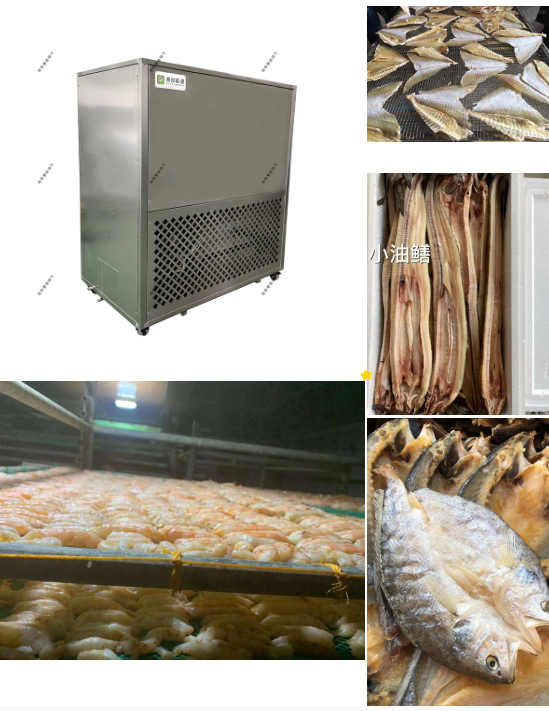
熱泵烘干憑借低溫節能、控溫控濕精準、封閉衛生等優勢,已成為水產品加工的主流選擇。水產品水分含量高、脂肪易氧化、蛋白質敏感,烘干過程需嚴控關鍵要點,方能保障成品色澤鮮亮、肉質緊實、風味純正且營養留存。以下從核心參數、設備適配、預處理及過程管控四方面,詳解烘干關鍵要點。
With the advantages of low-temperature energy saving, precise temperature and humidity control, and closed hygiene, heat pump drying has become the mainstream choice for aquatic product processing. Aquatic products have high moisture content, easily oxidizable fat, and sensitive protein. During the drying process, key points must be strictly controlled to ensure that the finished products have bright color, firm meat, pure flavor and retained nutrition. The key drying points are detailed below from four aspects: core parameters, equipment adaptation, pretreatment and process control.
一、精準控溫,低溫鎖鮮防變質
水產品烘干核心原則為低溫慢烘,嚴禁高溫急烘。高溫易導致蛋白質變性、脂肪氧化發黃,口感發柴且營養流失。常規水產品適宜溫度區間為35-45℃,蝦仁、煮制蝦類可適當提高至 50-65℃。采用分段控溫更優:初干段 45℃左右快速脫除表面水分,終干段 30-40℃低溫固化,鎖住風味與營養。
1. Precise Temperature Control, Low-Temperature Freshness Locking to Prevent Deterioration
The core principle of aquatic product drying is low-temperature slow drying; high-temperature rapid drying is strictly prohibited. High temperature easily causes protein denaturation, fat oxidation and yellowing, dry taste and nutrient loss. The suitable temperature range for conventional aquatic products is 35-45℃, and for shrimp meat and boiled shrimp, it can be appropriately increased to 50-65℃. Stepwise temperature control is better: quickly remove surface moisture at about 45℃ in the initial drying stage, and solidify at 30-40℃ in the final drying stage to lock in flavor and nutrition.
二、嚴控濕度,均衡排濕防霉變
水產品含水量高(通常 80% 以上),且水分多嵌于脂肪中,脫水難度大。烘干房需精準控濕,前期相對濕度維持 40%-50%,快速排走表面水汽;中期降至 30%-40%,加速內部水分遷移;后期穩定 20%-30%,防止返潮霉變。需匹配智能排濕系統,避免水汽滯留導致異味、發黑,成品含水率控制在 12%-18% 為佳。
2. Strict Humidity Control, Balanced Moisture Discharge to Prevent Mildew
Aquatic products have high water content (usually more than 80%), and most of the water is embedded in fat, making dehydration difficult. The drying room needs precise humidity control: maintain the relative humidity at 40%-50% in the early stage to quickly discharge surface water vapor; reduce it to 30%-40% in the middle stage to accelerate internal water migration; stabilize it at 20%-30% in the later stage to prevent moisture regain and mildew. An intelligent moisture discharge system should be matched to avoid peculiar smell and blackening caused by water vapor retention, and the moisture content of the finished product is preferably controlled at 12%-18%.
三、循環風均衡,風速適配防結殼
充足且均勻的循環風是烘干均勻的關鍵。烘干房需設計 360° 全域循環風,風速控制在 1.5-3m/s,確保氣流穿透物料層,帶走水汽。物料擺放時,烘盤間預留 5cm 左右空隙,避免堆疊過厚導致風路不暢、干濕不均。同時防止風速過高造成表面結殼,形成 “假干” 現象。
3. Balanced Circulating Air, Suitable Wind Speed to Prevent Crusting
Sufficient and uniform circulating air is the key to uniform drying. The drying room should be designed with 360° full-area circulating air, and the wind speed should be controlled at 1.5-3m/s to ensure that the air flow penetrates the material layer and takes away water vapor. When placing materials, leave a gap of about 5cm between baking trays to avoid poor air circulation and uneven dryness and wetness caused by excessive stacking. At the same time, prevent excessive wind speed from causing surface crusting and forming a "false dry" phenomenon.
四、設備防腐適配,保障衛生安全
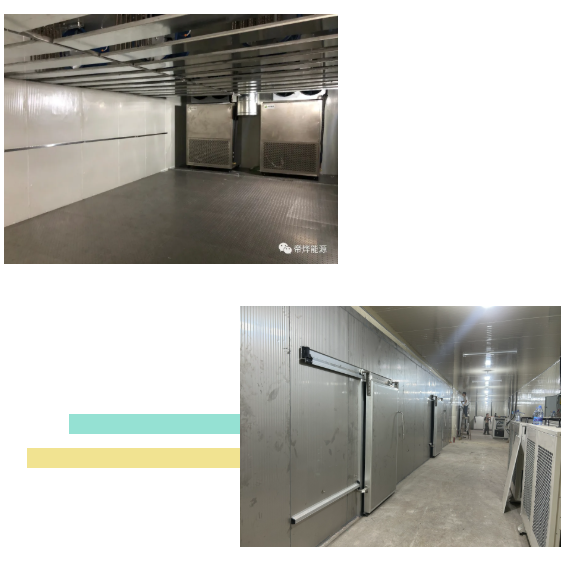
水產品含鹽分,易腐蝕設備,接觸物料部件需選用316L 食品級不銹鋼,外殼做防腐噴涂處理。采用封閉烘干模式,符合 GB 14881 食品衛生規范,避免灰塵、蚊蟲污染。優先選擇變頻閉環控制機型,控溫精度 ±0.5℃、控濕精度 ±3% RH,適配海產品低溫鎖鮮需求。
4. Equipment Anti-Corrosion Adaptation to Ensure Sanitary Safety
Aquatic products contain salt, which is easy to corrode equipment. The parts in contact with materials should be made of 316L food-grade stainless steel, and the shell should be treated with anti-corrosion spraying. Adopt closed drying mode, which complies with GB 14881 food hygiene standards to avoid dust and mosquito pollution. Prioritize frequency conversion closed-loop control models with temperature control accuracy of ±0.5℃ and humidity control accuracy of ±3% RH, which are suitable for the low-temperature fresh-keeping needs of seafood.
五、預處理到位,奠定烘干基礎
烘干前需做好預處理:新鮮水產品及時清洗去雜、去鱗去內臟,切片厚度均勻(控制在 2-3cm),保證受熱一致。蝦類可先蒸制 10 分鐘至易脫殼狀態,再均勻攤放,避免重疊粘連。預處理后瀝干表面水分,可縮短烘干周期,提升成品品質。
5. In-Place Pretreatment to Lay the Foundation for Drying
Pretreatment should be done well before drying: fresh aquatic products should be cleaned in time to remove impurities, scales and internal organs, and sliced into uniform thickness (controlled at 2-3cm) to ensure consistent heating. Shrimp can be steamed first for 10 minutes until easy to shell, then spread evenly to avoid overlapping and adhesion. Drain the surface water after pretreatment, which can shorten the drying cycle and improve the quality of finished products.
六、過程智能管控,穩定烘干品質
采用微電腦智能控制系統,預設分段溫濕度曲線,全程自動化運行,減少人為干預誤差。烘干周期通常 10-20 小時,根據物料種類、大小調整參數,避免烘干過度或不足。定期清理烘干房濾網、冷凝水盤,保持設備清潔,防止交叉污染,保障每批次成品品質穩定。
6. Intelligent Process Control to Stabilize Drying Quality
Adopt a microcomputer intelligent control system, preset stepwise temperature and humidity curves, and run automatically throughout the whole process to reduce errors caused by human intervention. The drying cycle is usually 10-20 hours, and parameters are adjusted according to the type and size of materials to avoid over-drying or under-drying. Regularly clean the filter screen and condensate pan of the drying room to keep the equipment clean, prevent cross-contamination, and ensure the stable quality of each batch of finished products.


